
A garage ceiling leak doesn’t always mean the roof is failing. In this case, a homeowner called us after seeing water staining and dripping inside their garage. The leak looked like a roof problem, but our diagnostic process revealed the real source of water intrusion.
What the Homeowner Noticed
- Water staining on the garage ceiling
- Dripping during or after heavy rain
- Concern that the roof shingles or flashing had failed
What Caused the Leak
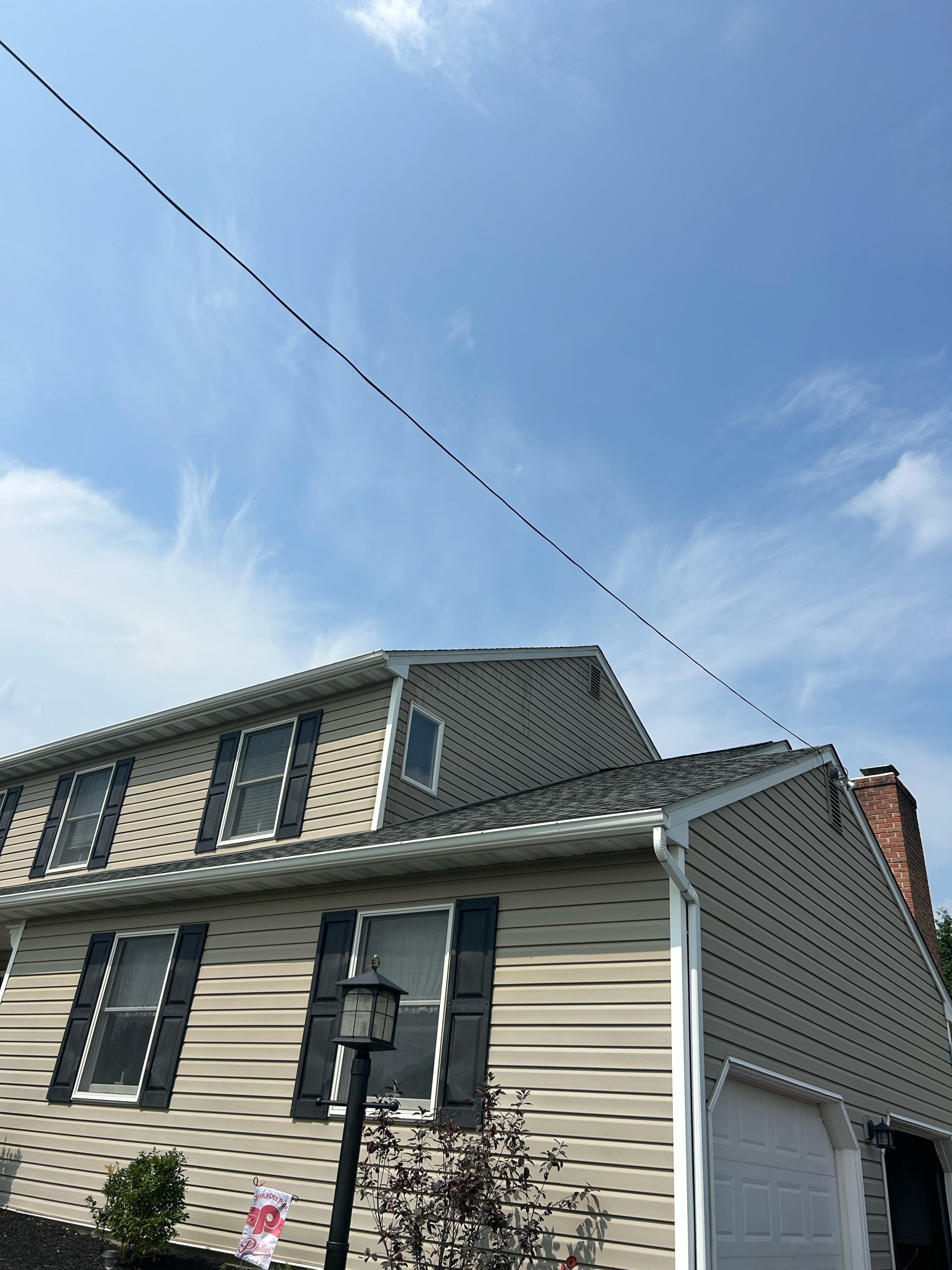
After ruling out a roof-surface failure, we discovered a construction detail that allowed water to travel behind the exterior: the builder had omitted house wrap behind the siding at the affected area. Without that drainage and protection layer, wind-driven rain can get behind siding and migrate into framing, ceilings, and interior finishes.
How We Diagnosed the Source
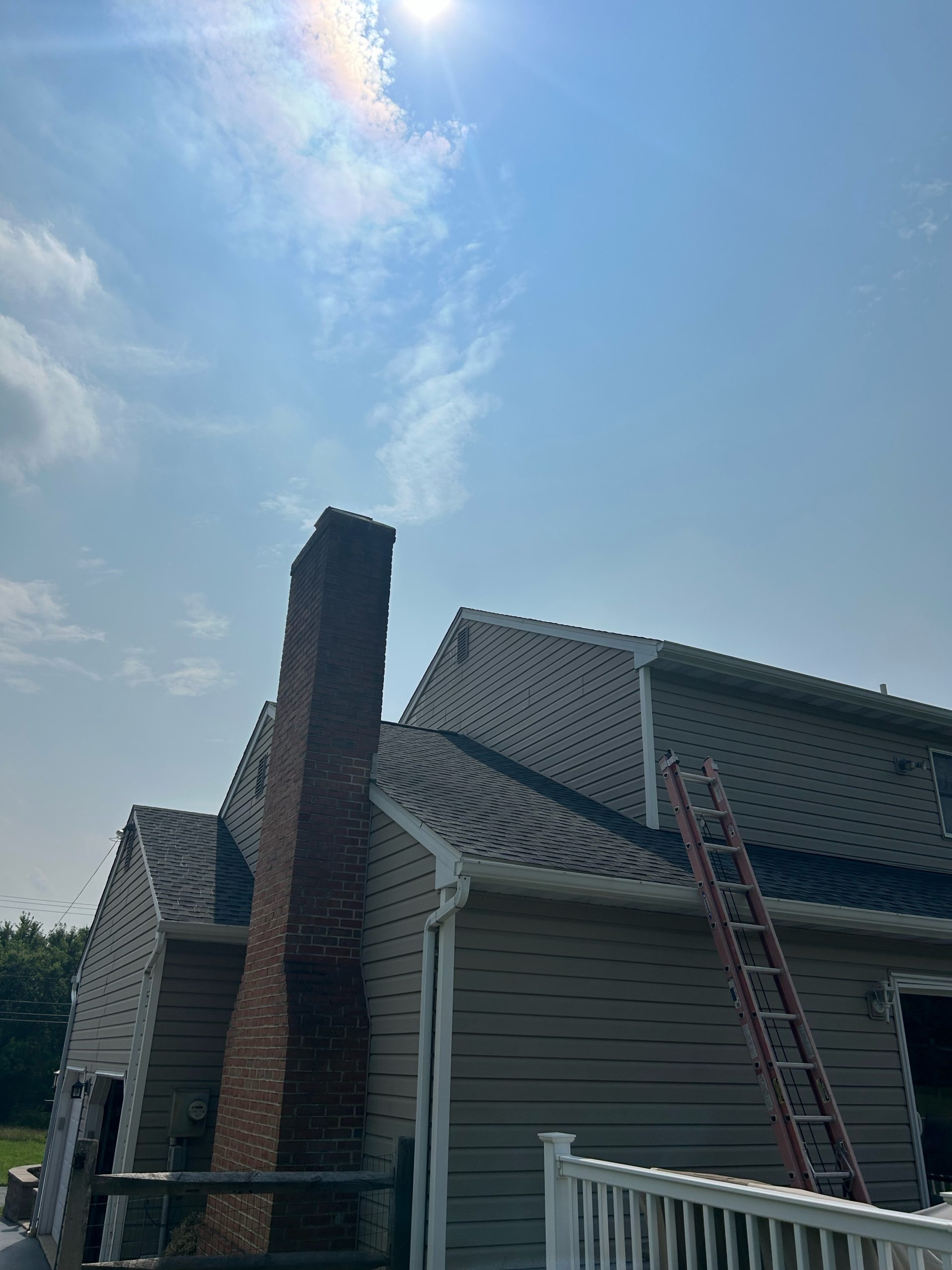
We started with a systematic inspection, so we didn’t guess or “chase symptoms.” That included using infrared roof leak detection as part of the evaluation. The scan helped confirm that the roof structure above the garage was not showing the patterns we’d expect from an active roof-surface leak. That pushed the investigation to the roof-to-wall transition and siding details.
Once we checked the wall assembly near the suspected entry point, the missing house wrap became obvious, and it explained why the garage ceiling leak persisted even when the roof itself appeared sound.
Before & After: The Repair Process
Below are before-and-after images showing the repair area and the corrected weather barrier details.
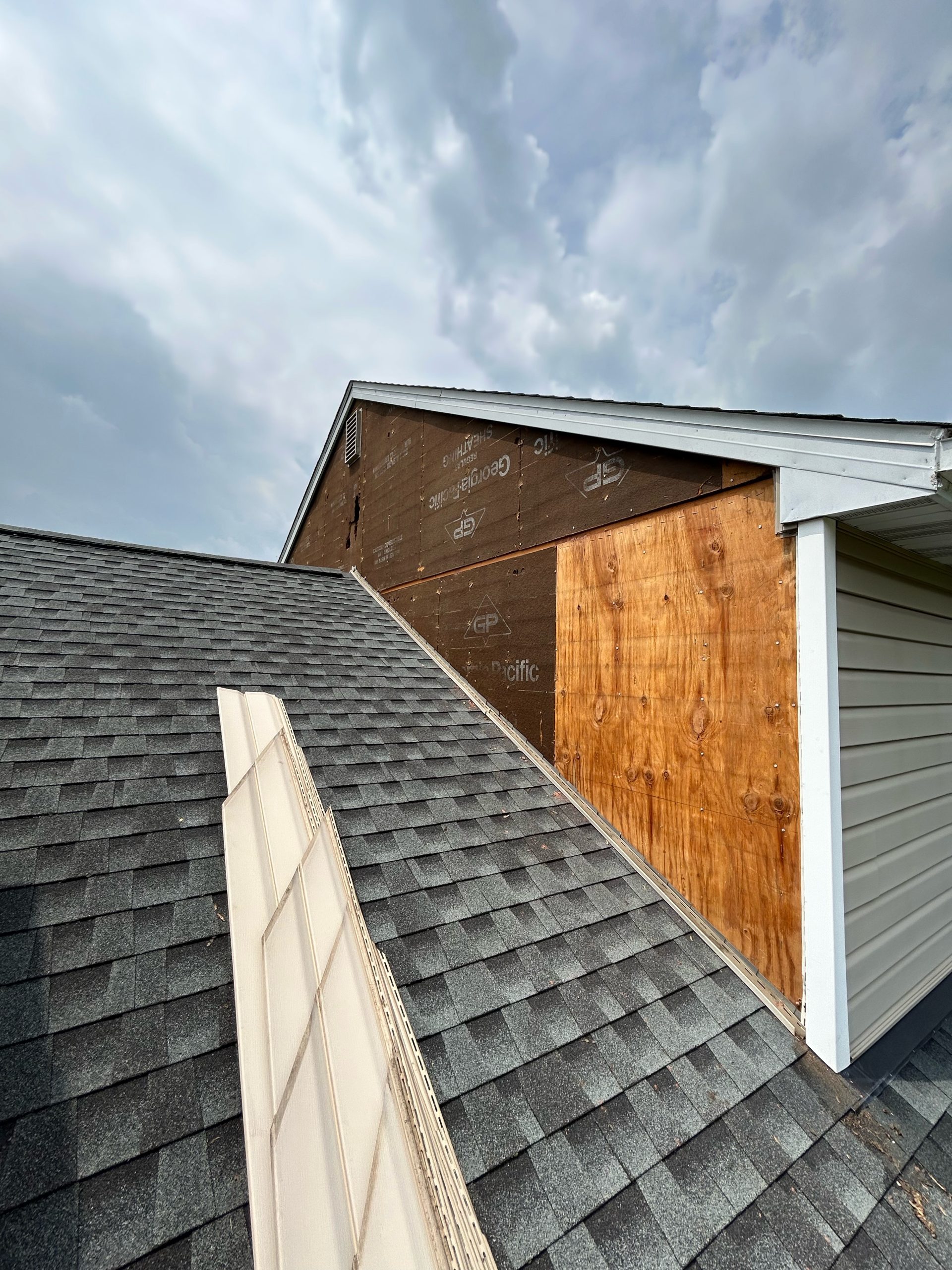
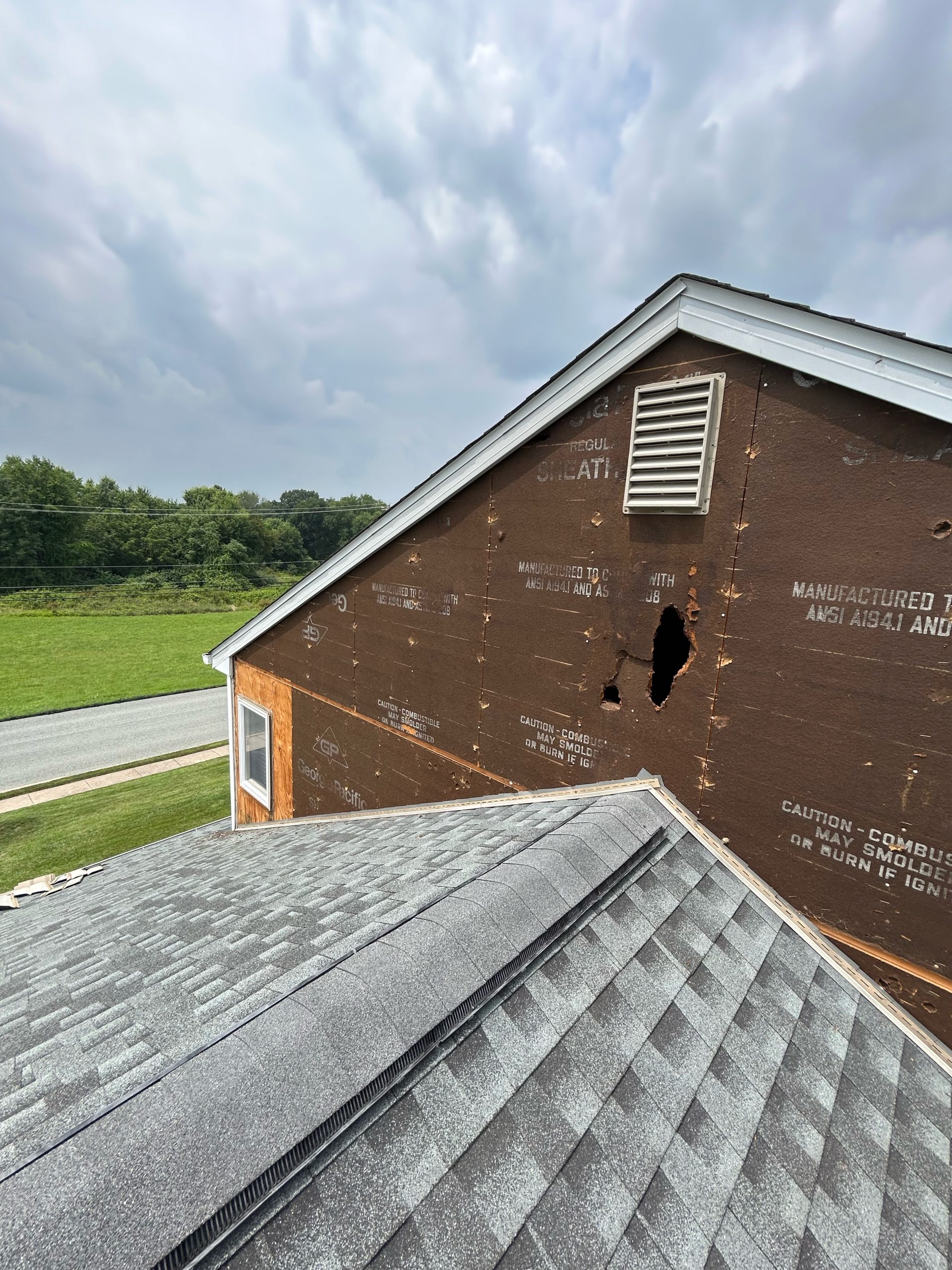
How We Repaired the Leak
To stop the water intrusion at the source, we:
- Carefully removed siding in the affected area
- Installed proper house wrap as the drainage plane behind the siding
- Taped seams to create a continuous, water-managed barrier
- Reinstalled the siding cleanly and correctly
After the repair, the garage ceiling stayed dry—even during heavy rains. Just as important: the fix addressed the true source of the leak instead of applying a temporary patch.
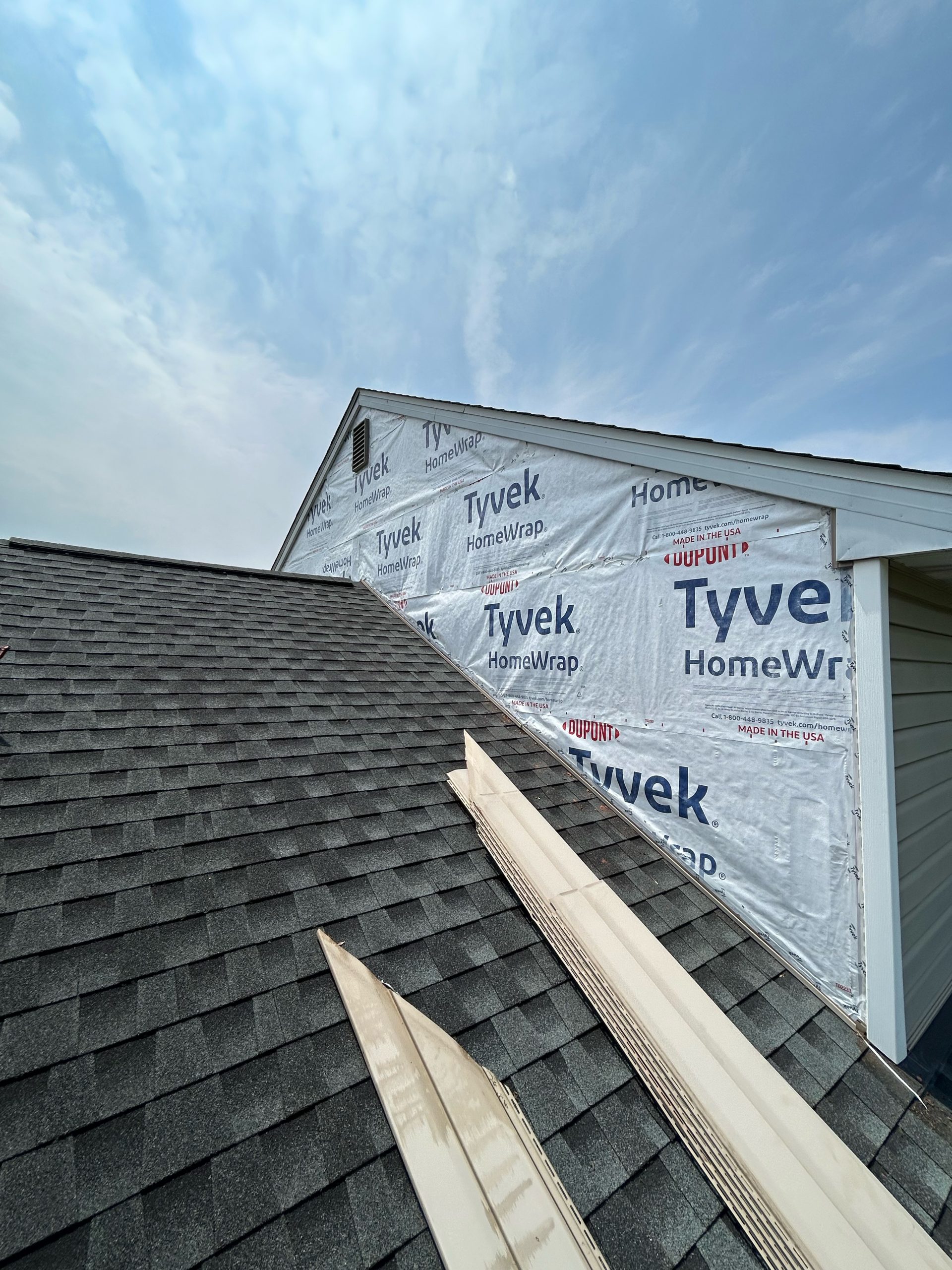
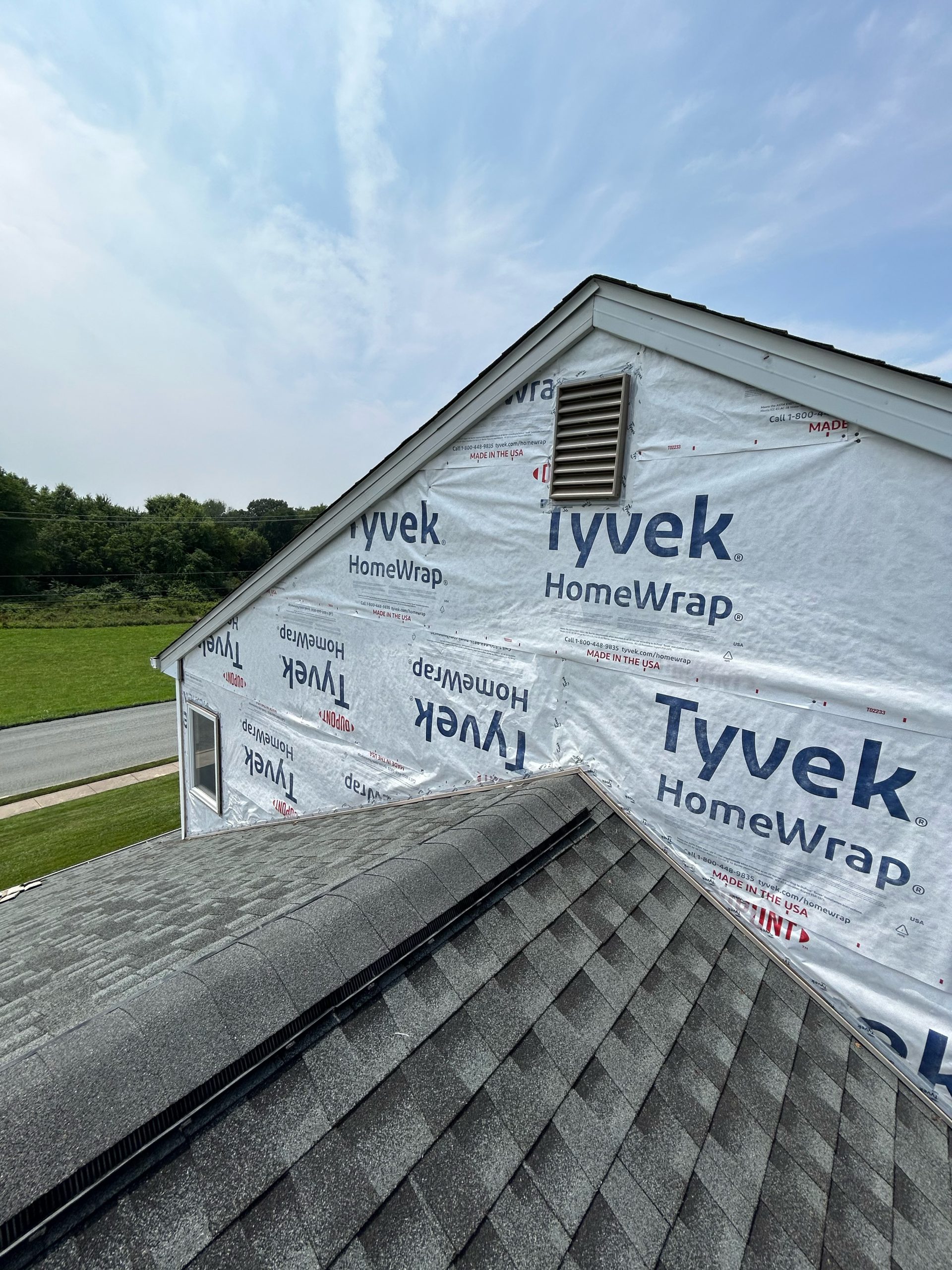
Why Roof-to-Wall Details Matter (Flashing, Siding, and Water Intrusion)
This case is a great example of why leak diagnosis is different from general roof repair. Water can enter at one location and show up somewhere else. The most common culprits we see in these “mystery leak” situations include:
1) Roof Flashing Problems
Flashing directs water away from transitions and penetrations. When flashing is missing, damaged, or installed incorrectly, water can enter the building envelope and travel to ceilings and walls.
If you suspect flashing is involved, see our Roof Flashing Leak Repair page.
2) Siding and Water Management Failures
Siding is not meant to be the only water barrier. Wind-driven rain can get behind siding—so details like overlaps, seams, and properly layered materials matter.
3) Missing or Incorrect House Wrap
House wrap provides a critical secondary layer that helps manage water intrusion behind siding. When it’s missing or installed incorrectly, water can reach framing, insulation, and interior finishes—often long before anyone notices.
What To Do If You Have a Ceiling Leak
- Don’t assume you need a full roof replacement. The roof surface may be fine.
- Get an inspection focused on finding the source. Diagnosis comes before repairs.
- Act quickly. Water intrusion can lead to rot, mold, and higher repair costs.
For complete roof leak diagnosis and repair services, visit our Roof Leak Detection & Repair page.
If you’re dealing with an active leak or water intrusion, contact us, and we’ll help identify the source and recommend the most direct repair, without unnecessary work.

Jon transitioned into custom residential home construction with an opportunity to become a working partner with Mike Evangelist. Since roofing had been a large part of my past work experience, it was a natural fit. Finding and detecting hard-to-track roof leaks is our specialty.
- Roof Leak Repair Case Study: Garage Ceiling Leak Caused by Missing House Wrap - January 28, 2025
- Kick-Out Flashing Repair: Solving a Bathroom Leak During Heavy Rain - November 29, 2023
- Proper Vent Pipe Flashing: The Key to a Leak-Free Roof - October 31, 2023